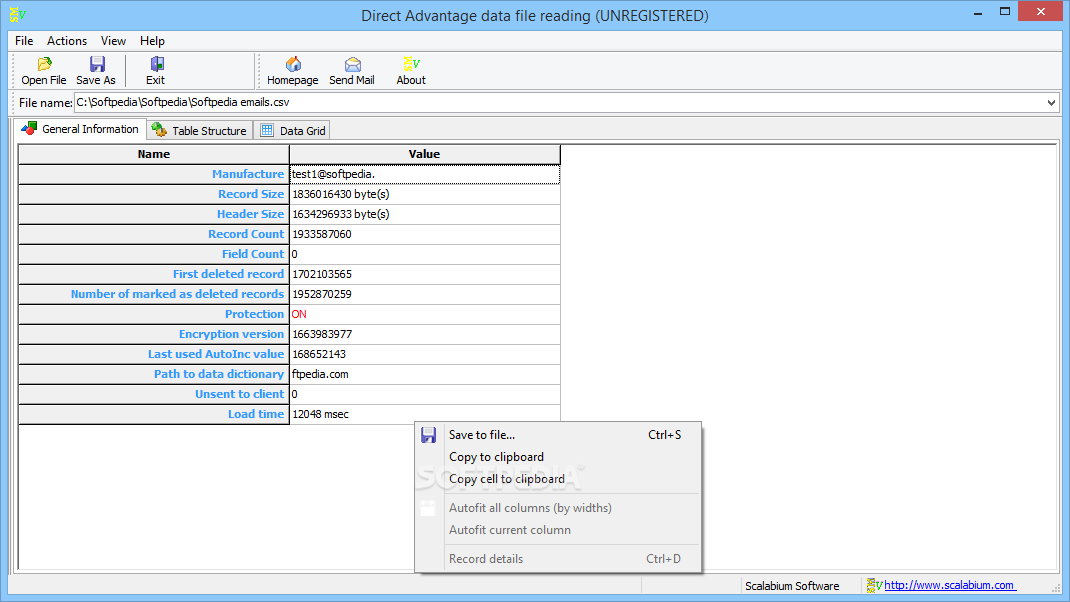
Advantage Database Server 10 Serial Number
Managing Processes. This section discusses how to enable shared server and how to set or alter shared server initialization parameters. It contains the following topics Initialization Parameters for Shared Server. The following initialization parameters control shared server operation SHAREDSERVERS Specifies the initial number of shared servers to start and the minimum number of shared servers to keep. This is the only required parameter for using shared servers. MAXSHAREDSERVERS Specifies the maximum number of shared servers that can run simultaneously. SHAREDSERVERSESSIONS Specifies the total number of shared server user sessions that can run simultaneously. Setting this parameter enables you to reserve user sessions for dedicated servers. DISPATCHERS Configures dispatcher processes in the shared server architecture. MAXDISPATCHERS Specifies the maximum number of dispatcher processes that can run simultaneously. This parameter can be ignored for now. ORACLE DATABASE APPLIANCE X52 KEY BENEFITS Worlds 1 database Simple, reliable, and affordable Ease of deployment, patching. Designing and Administering Storage on SQL Server 2012. The following section is topical in approach. Rather than describe all the administrative functions and. A large corporation that has many locations may have a backbone network that ties all of the locations together, for example, if a server cluster needs to be accessed. Welcome. Thanks for licensing Manifold System. Manifold System has exploded onto the GIS scene with unprecedented quality, performance, and value. Installation of the Advantage Database Server version 11. Windows Operation System. Easy change afterwards of the user license on a test system Locate the. Express Burn Serial Number Mac. Supported. In the context of Apache HBase, supported means that HBase is designed to work in the way described, and deviation from the defined behavior or. Note. Azure SQL Database V12 was released in December 2014. One aspect of that release was that newly created databases had their compatibility level set to 120. Latest trending topics being covered on ZDNet including Reviews, Tech Industry, Security, Hardware, Apple, and Windows. Advantage Database Server 10 Serial Number' title='Advantage Database Server 10 Serial Number' />SQL Server AlwaysOn provides a highavailability and Disasterrecovery solution for SQL Server 2012. It makes use of existing SQL Server features, particularly. It will only be useful in a future release when the number of dispatchers is auto tuned according to the number of concurrent connections. CIRCUITS Specifies the total number of virtual circuits that are available for inbound and outbound network sessions. Memory Management for Shared Server. Shared server requires some user global area UGA in either the shared pool or large pool. For installations with a small number of simultaneous sessions, the default sizes for these system global area SGA components are generally sufficient. However, if you expect a large number of sessions for your installation, you may have to tune memory to support shared server. Item12180/MSWGA.jpg' alt='Advantage Database Server 10 Serial Number' title='Advantage Database Server 10 Serial Number' />See the Configuring and Using Memory section of Oracle Database Performance Tuning Guide for guidelines. Enabling Shared Server. Shared server is enabled by setting the SHAREDSERVERS initialization parameter to a value greater than 0. The other shared server initialization parameters need not be set. Because shared server requires at least one dispatcher in order to work, a dispatcher is brought up even if no dispatcher has been configured. Dispatchers are discussed in Configuring Dispatchers. Shared server can be started dynamically by setting the SHAREDSERVERS parameter to a nonzero value with the ALTER SYSTEM statement, or SHAREDSERVERS can be included at database startup in the initialization parameter file. If SHAREDSERVERS is not included in the initialization parameter file, or is included but is set to 0, then shared server is not enabled at database startup. Note. If SHAREDSERVERS is not included in the initialization parameter file at database startup, but DISPATCHERS is included and it specifies at least one dispatcher, shared server is enabled. In this case, the default for SHAREDSERVERS is 1. If neither SHAREDSERVERS nor DISPATCHERS is included in the initialization file, you cannot start shared server after the instance is brought up by just altering the DISPATCHERS parameter. You must specifically alter SHAREDSERVERS to a nonzero value to start shared server. Note. If you create your Oracle database with Database Configuration Assistant DBCA, DBCA configures a dispatcher for Oracle XML DB XDB. This is because XDB protocols like HTTP and FTP require shared server. This results in a SHAREDSERVER value of 1. Although shared server is enabled, this configuration permits only sessions that connect to the XDB service to use shared server. To enable shared server for regular database sessions for submitting SQL statements, you must add an additional dispatcher configuration, or replace the existing configuration with one that is not specific to XDB. See Configuring Dispatchers for instructions. Determining a Value for SHAREDSERVERSThe SHAREDSERVERS initialization parameter specifies the minimum number of shared servers that you want created when the instance is started. After instance startup, Oracle Database can dynamically adjust the number of shared servers based on how busy existing shared servers are and the length of the request queue. In typical systems, the number of shared servers stabilizes at a ratio of one shared server for every ten connections. For OLTP applications, when the rate of requests is low, or when the ratio of server usage to request is low, the connections to servers ratio could be higher. In contrast, in applications where the rate of requests is high or the server usage to request ratio is high, the connections to server ratio could be lower. The PMON process monitor background process cannot terminate shared servers below the value specified by SHAREDSERVERS. Therefore, you can use this parameter to stabilize the load and minimize strain on the system by preventing PMON from terminating and then restarting shared servers because of coincidental fluctuations in load. If you know the average load on your system, you can set SHAREDSERVERS to an optimal value. The following example shows how you can use this parameter Assume a database is being used by a telemarketing center staffed by 1. Look N Stop Serial. On average, each agent spends 9. To keep the shared servers from being terminated as agents talk to customers and then spawned again as agents access the database, a DBA specifies that the optimal number of shared servers is 1. However, not all work shifts are staffed at the same level. On the night shift, only 2. Since SHAREDSERVERS is a dynamic parameter, a DBA reduces the number of shared servers to 2. Decreasing the Number of Shared Server Processes. You can decrease the minimum number of shared servers that must be kept active by dynamically setting the SHAREDSERVERS parameter to a lower value. Thereafter, until the number of shared servers is decreased to the value of the SHAREDSERVERS parameter, any shared servers that become inactive are marked by PMON for termination. The following statement reduces the number of shared servers. ALTER SYSTEM SET SHAREDSERVERS 5. Setting SHAREDSERVERS to 0 disables shared server. For more information, see Disabling Shared Server. Limiting the Number of Shared Server Processes. The MAXSHAREDSERVERS parameter specifies the maximum number of shared servers that can be automatically created by PMON. It has no default value. If no value is specified, then PMON starts as many shared servers as is required by the load, subject to these limitations The process limit set by the PROCESSES initialization parameterA minimum number of free process slots at least one eighth of the total process slots, or two slots if PROCESSES is set to less than 2. System resources. Note. On Windows NT, take care when setting MAXSHAREDSERVERS to a high value, because each server is a thread in a common process. The value of SHAREDSERVERS overrides the value of MAXSHAREDSERVERS. Therefore, you can force PMON to start more shared servers than the MAXSHAREDSERVERS value by setting SHAREDSERVERS to a value higher than MAXSHAREDSERVERS. You can subsequently place a new upper limit on the number of shared servers by dynamically altering the MAXSHAREDSERVERS to a value higher than SHAREDSERVERS. The primary reason to limit the number of shared servers is to reserve resources, such as memory and CPU time, for other processes. For example, consider the case of the telemarketing center discussed previously The DBA wants to reserve two thirds of the resources for batch jobs at night. He sets MAXSHAREDSERVERS to less than one third of the maximum number of processes PROCESSES. SQL Server 2. 01. Windows and Linux. Your choice of language and platforms. Build modern applications using the language of your choice, on premises and in the cloud, now on Windows, Linux and Docker containers.